An innovative, cloud native, model-driven content and archiving solution, with a transparent policy-based and attribute-based access control (ABAC), that scales effortlessly with your organization.
Content migration, integration and distribution
Robust, high-performance and secure platform that empowers organizations to distribute content across multiple systems and monitor information flows.
Available for all Documentum user interfaces, AmeXio myInsight is fully certified by OpenText and is a powerful add-on to help you generate custom dashboards and reports in a wide variety of formats.
AmeXio Cloud provides a multi-cloud IaaS, DaaS, PaaS and SaaS offering on 3 levels (public, private and hybrid), which is fully hosted and operated in the EU.
AI for Enterprises: How to use AI securely in Content Management
You have a meeting in 10 minutes. A contract needs a quick summary. A customer email needs a first draft. Meanwhile, the project team askss: “Do we already have a similar document like this?”
So, you do what many people do today: you open a public AI tool, such as ChatGPT, paste in a paragraph, and let generative AI do its work.
It feels efficient and modern but for enterprises, it raises a critical quiestion:
Where did that information go?
This blog explains how enterprises can use generative AI within their content environment. Safely and compliant.
AI risks for enterprises: data security, privacy and compliance
Generative language models are increasingly being adopted by organizations to analyze documents and produce summaries, reports, and actionable insights. At the same time, regulators and supervisory authorities continue to highlight the risks associated with processing personal data in systems outside approved enterprise channels. Deploying unauthorized generative AI on corporate content can introduce significant AI privacy compliance and confidentiality risks around AI data security, particularly when personal data or sensitive business information is involved.
When employees enter information into public AI platforms, that data may be transmitted to the AI provider’s infrastructure and may be logged and/or stored. This creates potential exposure across, such as
Data retention: what is kept, for how long, and under what conditions?
Cross-border transfers: where is the data processed and stored, and what does that mean for compliance?
Security controls: do you have clarity and assurance on how your data is protected?
And there’s a second layer of risk: some public AI services may use user inputs for quality improvement or (re)training, which can create tension with GDPR principles such as purpose limitation and transparency, particularly when personal data or confidential business content is involved.
A violation of the GDPR may result in fines of up to €20 million or up to 4% of the worldwide annual turnover (whichever is higher). An obligation to modify current practices.
An obligation to modify current practices.
A prohibition on processing certain personal data.
Reputational damage.
In other words: what starts as a productivity shortcut can quickly become a governance blind spot. And as AI adoption grows, so does shadow AI: employees start turning to tools outside official channels because they’re fast, accessible, and helpful.
So, what’s the answer?
It’s not to block innovation. It’s to bring generative AI into the environment where governance already exists.
AI inside Enterprise Content Management Systems
A secure AI platform for enterprise content management allows organizations to apply generative AI while maintaining control over data, permissions and compliance. Enterprise AI should not work like a consumer-AI like ChatGPT. In an organization, AI needs to be:
Private by design
Permission-aware by default
Auditable from end to end
That is exactly where OpenText Content Aviator comes in.
OpenText Content Aviator: Enterprise AI built for governance
OpenText Content Aviator enables organizations to apply generative AI to enterprise content, without exposing sensitive information to public AI services.
Content Aviator is an integrated AI-powered assistant that brings generative AI and large language models directly into OpenText content management platforms such as:
With an intuitive chat interface, employees can ask questions in natural language and receive relevant, contextual answers based on documents and business workspaces.
But the real differentiator is not the chat experience.
It’s the fact that Content Aviator is designed for enterprise security, privacy, and control.
What makes it enterprise-ready?
Content Aviator is built to ensure that AI adoption does not come at the expense of compliance or confidentiality:
Sensitive customer and business information stays within the secured OpenText environment and is not shared with public AI models or external parties.
Prompts and interactions remain private, rather than being publicly accessible like consumer tools.
Responses are generated only from content the user is authorized to access, preserving existing permissions and confidentiality levels.
Data is not used for model training without explicit consent, supporting governance and policy alignment.
Because Content Aviator is embedded within OpenText content platforms, existing roles, permissions, and audit trails extend to AI interactions. And through retrieval-augmented generation (RAG), only sources the logged-in user is permitted to view, within the selected workspaces, are used and referenced.
That means the AI does not become a super user and it doesn’t become a backdoor to restricted information.
Core capabilities of Content Aviator for Enterprise Content
A large language model solution like Content Aviator may sound complex, but in practice it’s designed to make enterprise content simpler, safer, and more accessible. Let’s take a closer look at Content Aviator’s capabilities within Core Content CE 25.4.
Conversational search – Ask instead of searching
Content Aviator enables employees to ask questions in natural language, (and through metadata-based queries) allowing users to retrieve enteprise content securely while reflecting both context and user permissions.
Instead of relying on keywords alone, semantic search helps connect a user’s question to relevant documents inside the business workspace, so answers align with intent and business context. The outcome is straightforward:
Less time spent searching and filtering.
Faster access to the right insight.
Fewer missed details when time is tight.
Traceable interactions – AI that’s audit-ready
In enterprise environments, it’s not enough for AI to be useful. It also needs to be accountable.
Content Aviator automatically applies existing roles, permissions, and audit trails to every interaction. Each action is:
Traceable
Policy-aware
Audit-ready
This supports strong governance and compliance without slowing down the user experience.
Content Aviator supports multiple content generation use cases based on existing enterprise content, including:
Summaries: extract key insights from documents and workspaces and convert them into concise summaries (formal or informal).
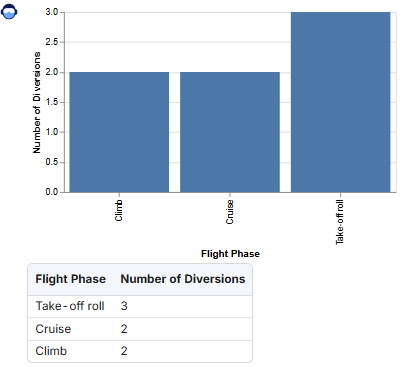
Diagrams and charts: transform unstructured document information into structured visualizations, generated directly in the chat interface. Click here for all available diagram and charts.
Document comparison: compare multiple documents to highlight similarities and differences.
Email drafts: generate draft communications based on existing content and context from within the OpenText environment.
This is where productivity gains become real: less reading, less manual rewriting, less cognitive overload, and more time spent on decisions and execution.
Turning secure AI into real Enterprise value
In practice, Content Aviator delivers value across risk reduction and quality improvement by unlocking and presenting information within established governance frameworks.
That means employees can move faster, while still operating within the boundaries of:
Organizational policies
Access controls
Compliance requirements
And because answers are grounded in authorized enterprise content, organizations improve both the accessibility and the trustworthiness of the information people use every day.
By combinging secure entprise AI, content management, and strong governance, organizations can unlock the value of generative AI without exposing sensitive data or violating compliance requirements
Want to explore how OpenText Content Aviator can take your content environment to the next level? AmeXio can help you get started.